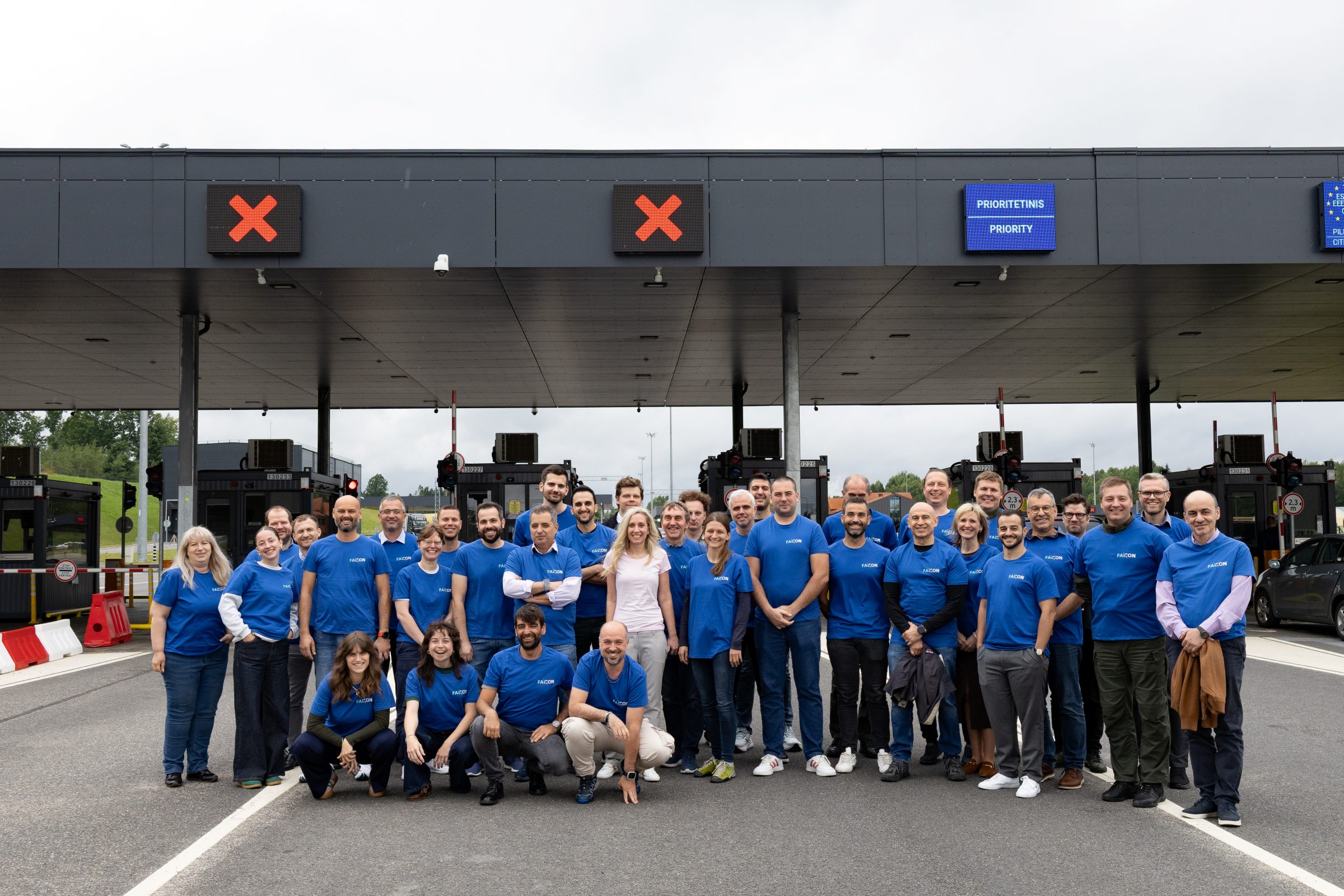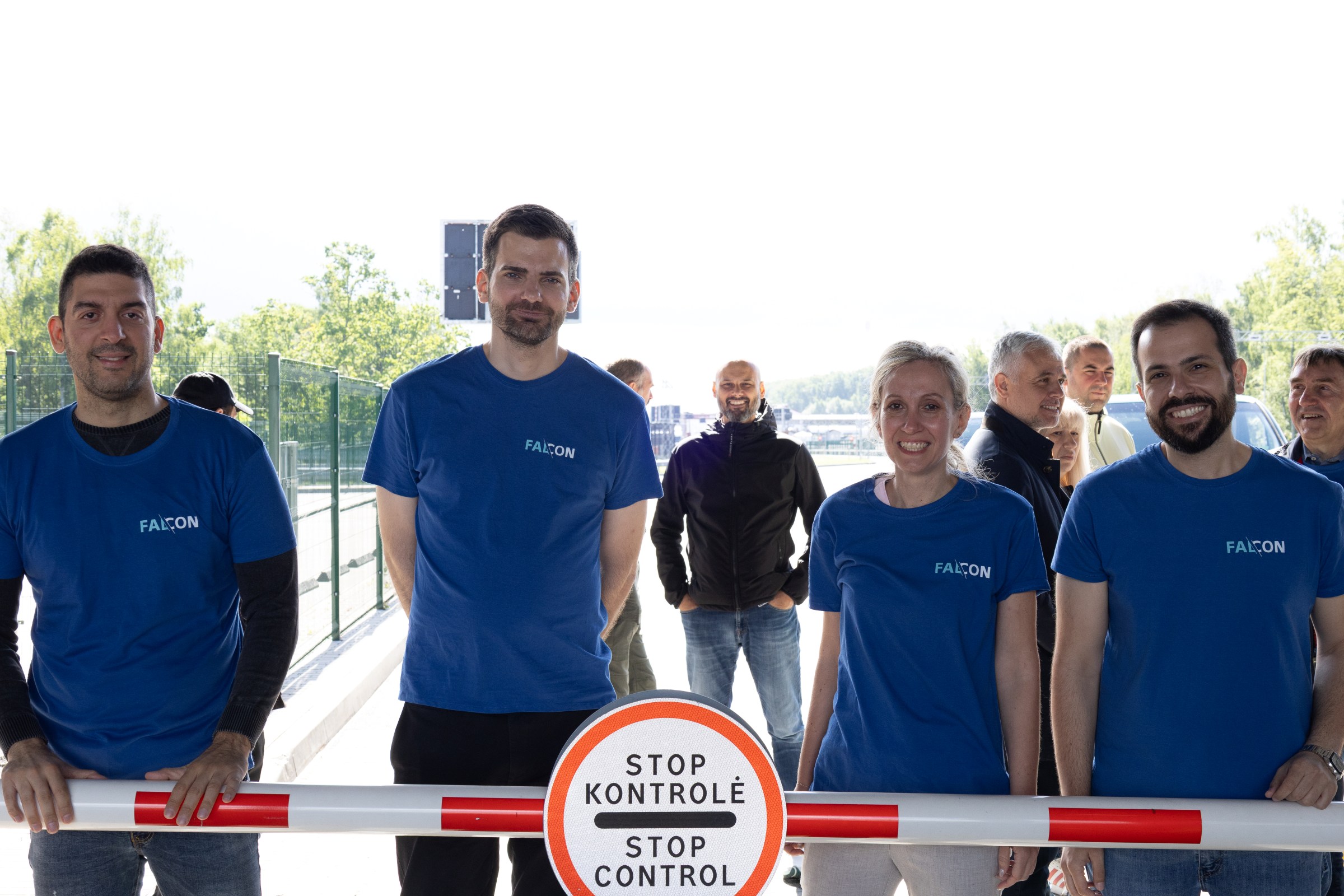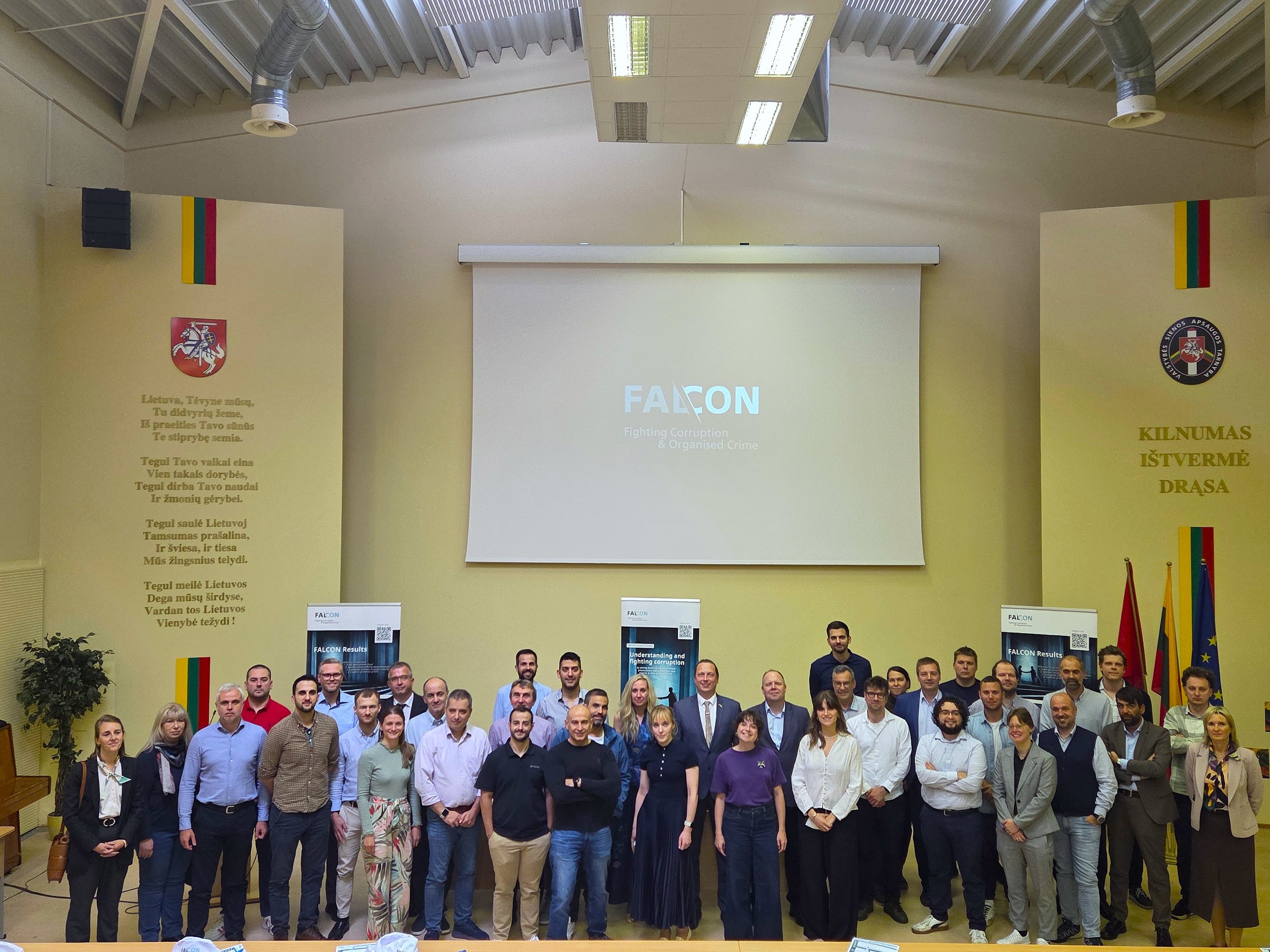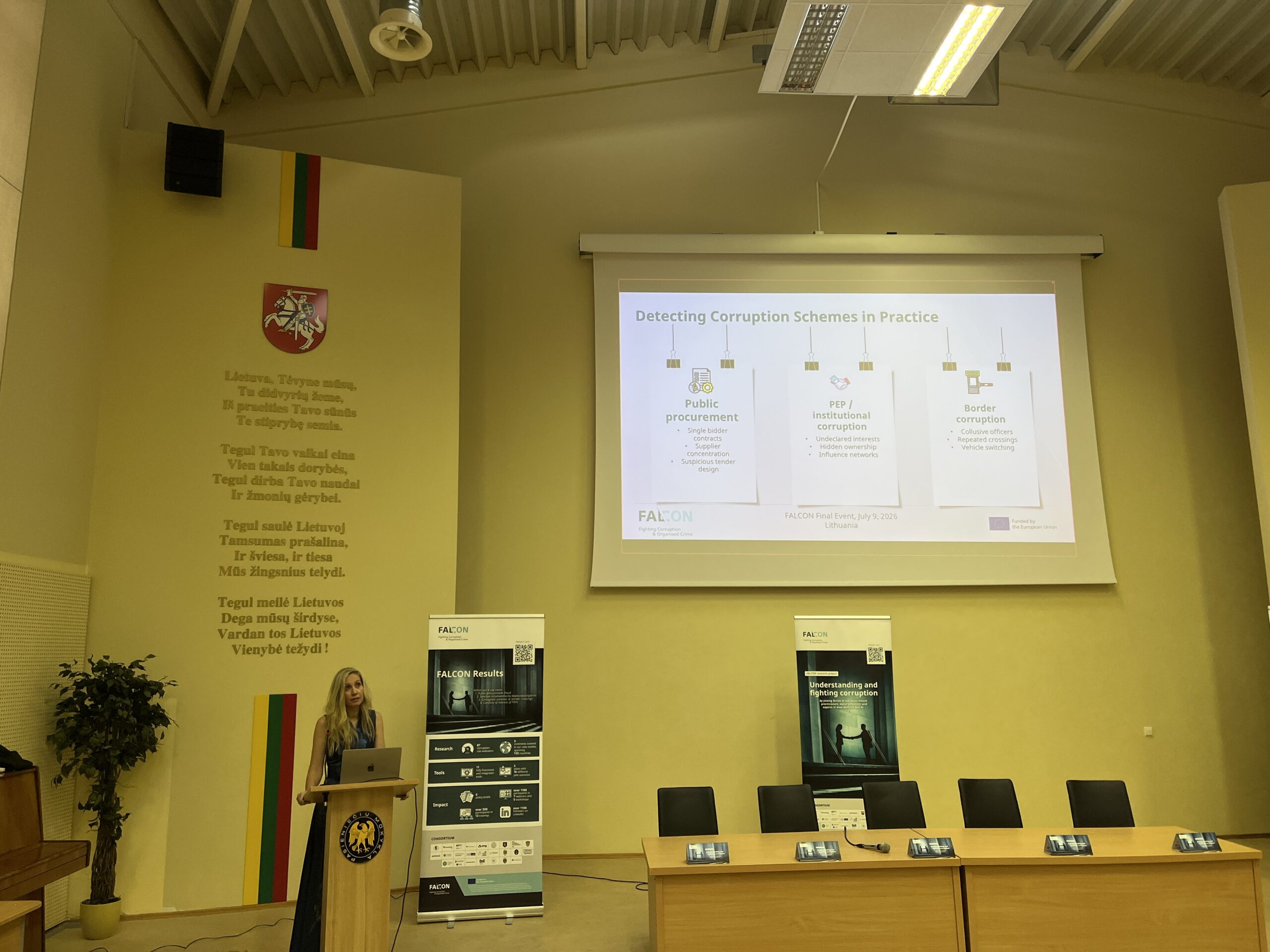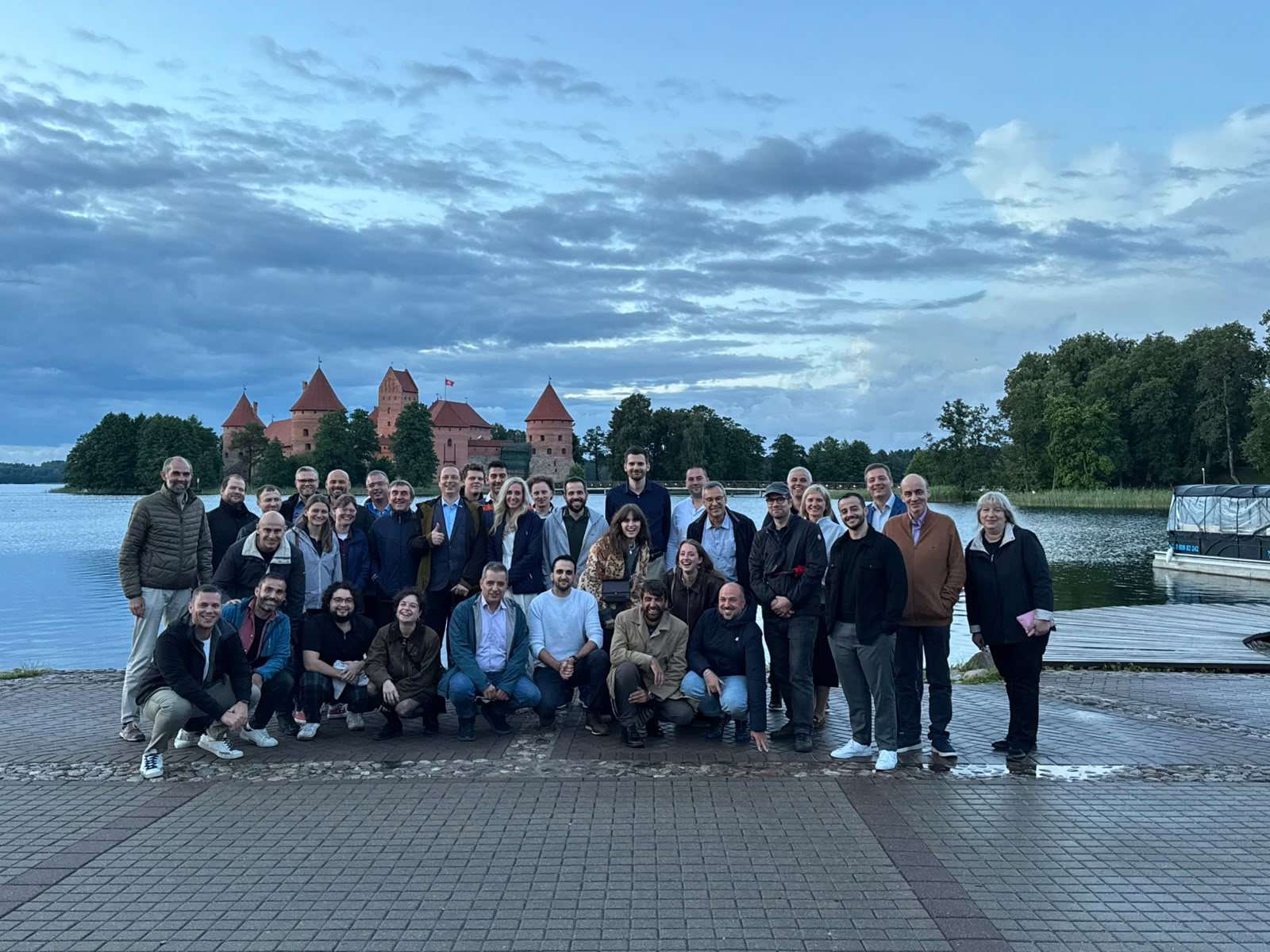
Three years ago, FALCON started with an ambitious goal: to strengthen the fight against corruption and organised crime through research, innovation and close collaboration between law enforcement, academia, industry and policymakers. In July, the project concluded with two closely connected events in Lithuania: the final Pilot Event dedicated to testing and validating the FALCON tools under real-world conditions, followed by the Final Event that brought partners and stakeholders together to look at the results and policy impact, and reflect on what the consortium has built together. Both events were kindly hosted by our partner VSAT, the State Border Guard Service at the Ministry of the Interior of the Republic of Lithuania, in Medininkai near Vilnius.
Pilot Event: Validating FALCON Tools under Real-World Conditions
At our Pilot Event we tested and discussed our 9 tools developed within the project along our 4 Use Cases:
- Public procurement fraud
- Sanction circumvention by ‘kleptocrats’/oligarchs
- Corruption schemes at border control points
- Conflicts of interest of politically exposed persons (PEPs)
The Pilot provided an excellent opportunity to validate FALCON’s capabilities, exchange valuable feedback, and strengthen collaboration among all partners as we move towards the final stages of the project.
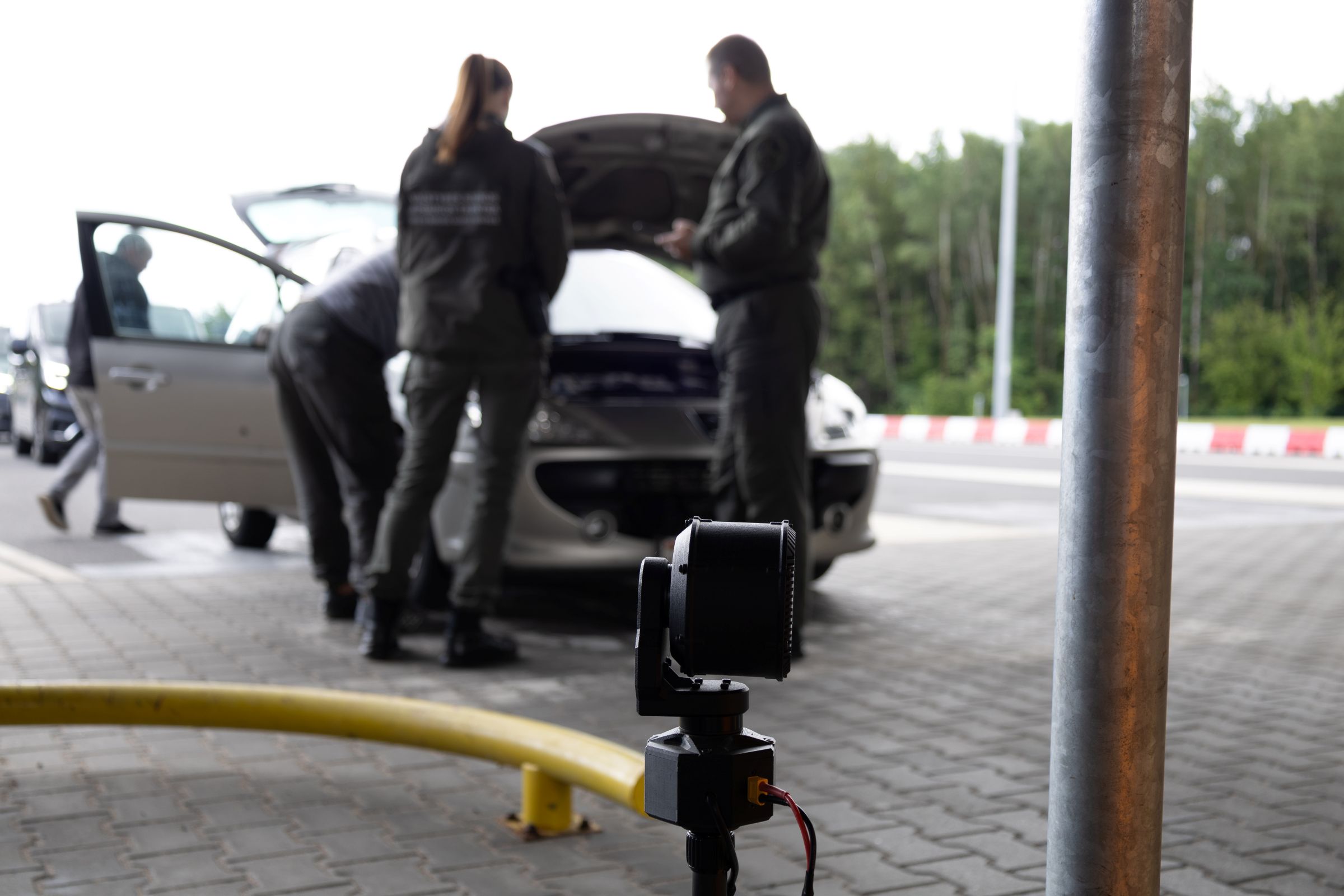
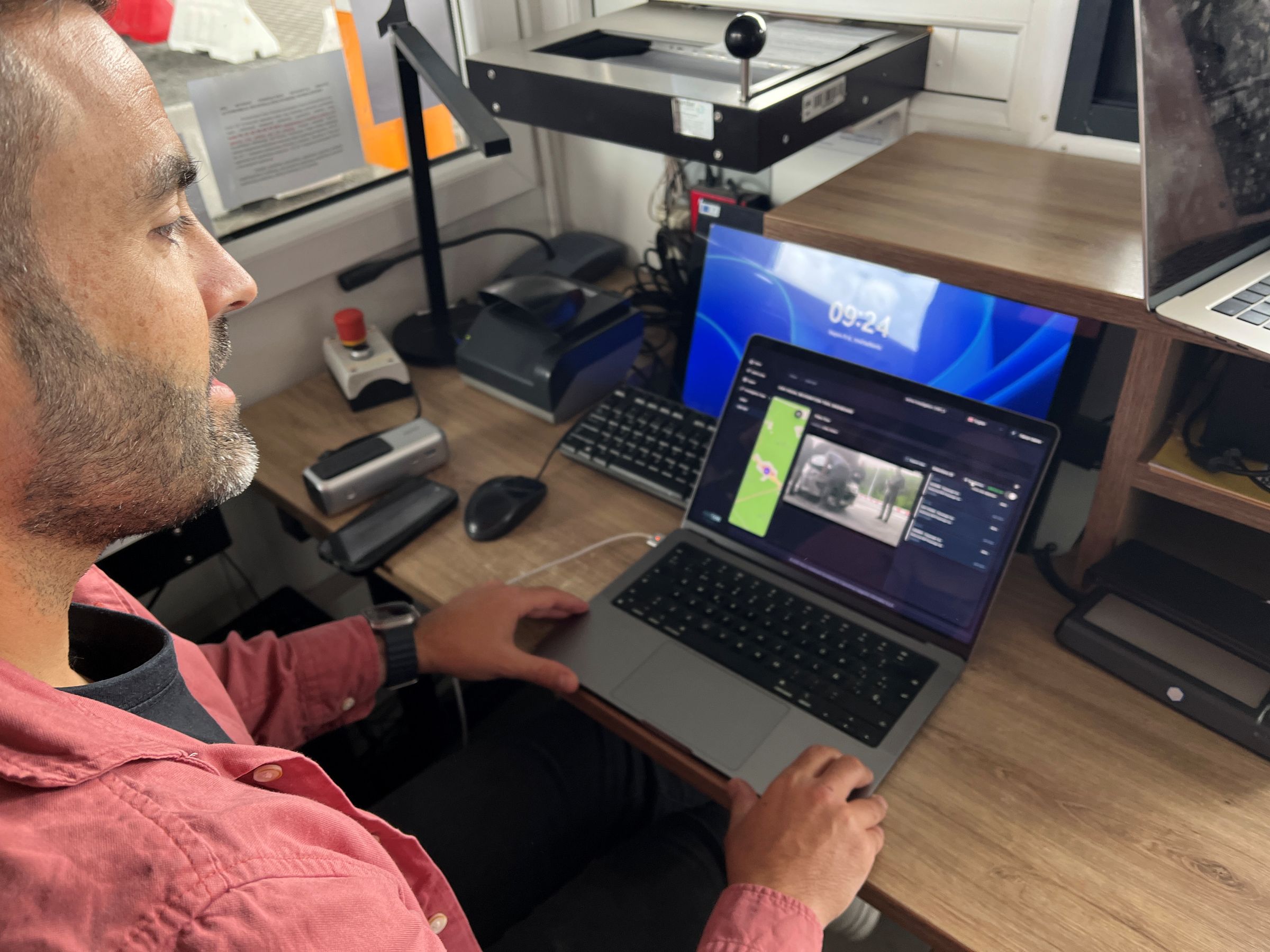
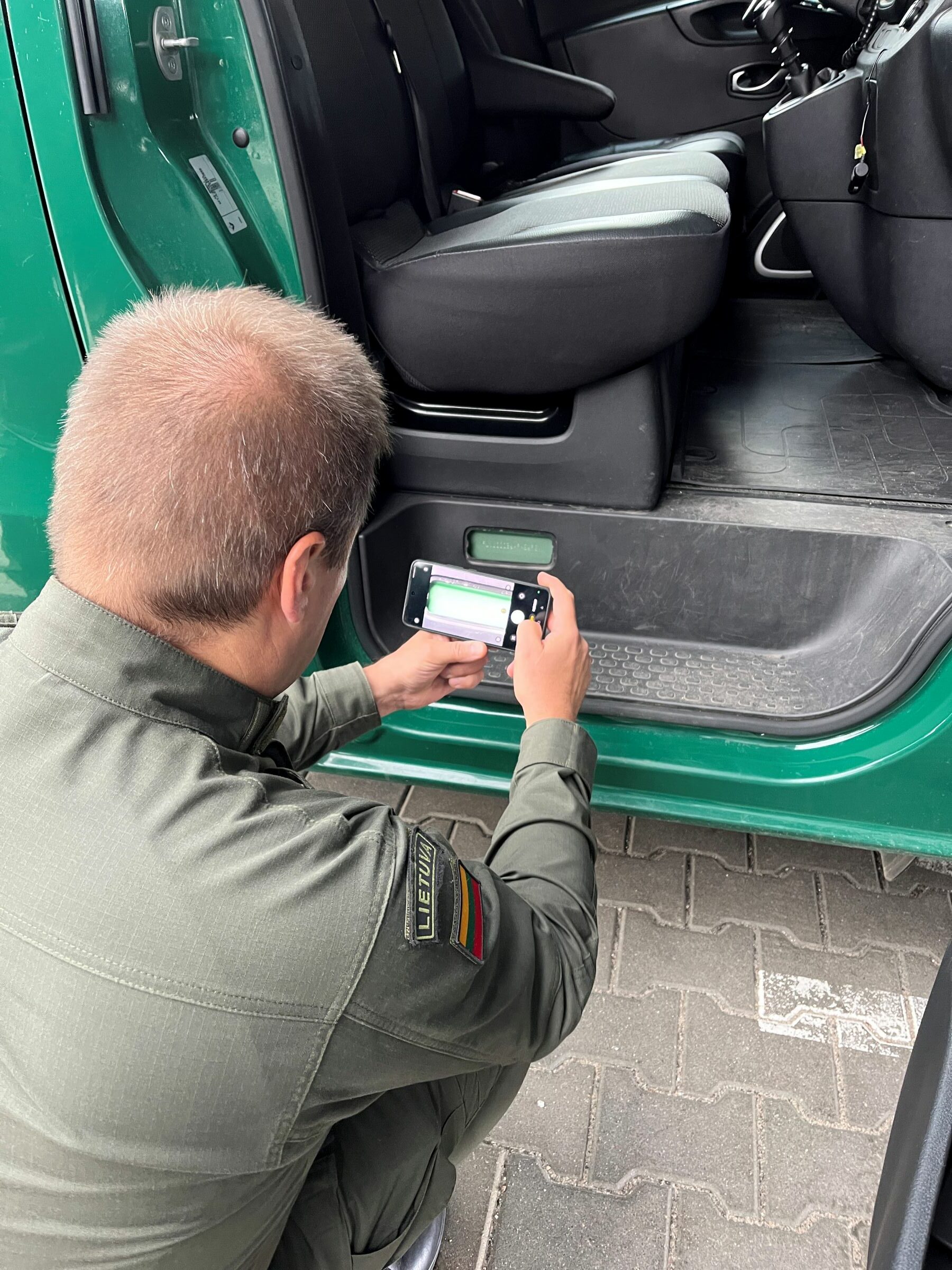
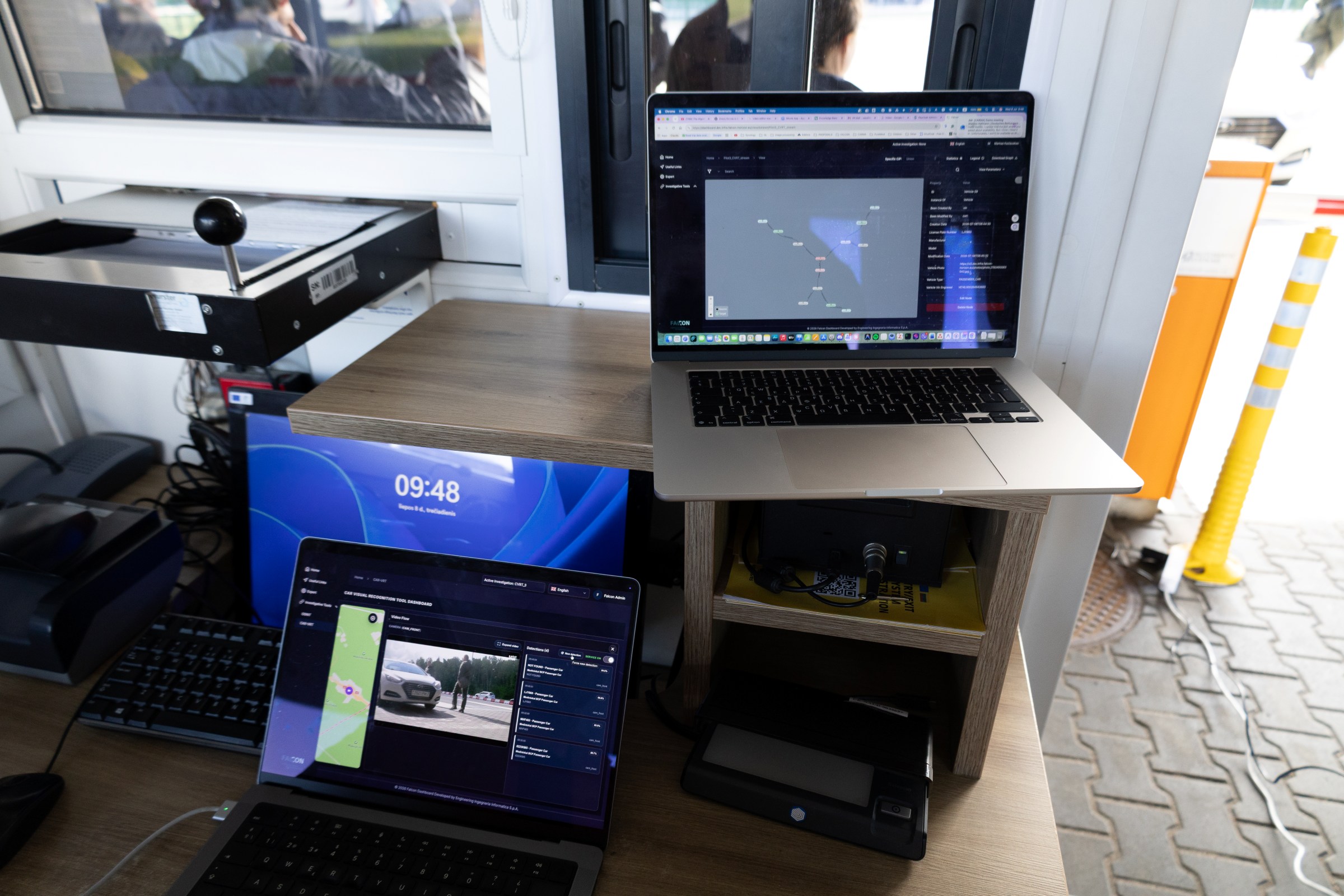
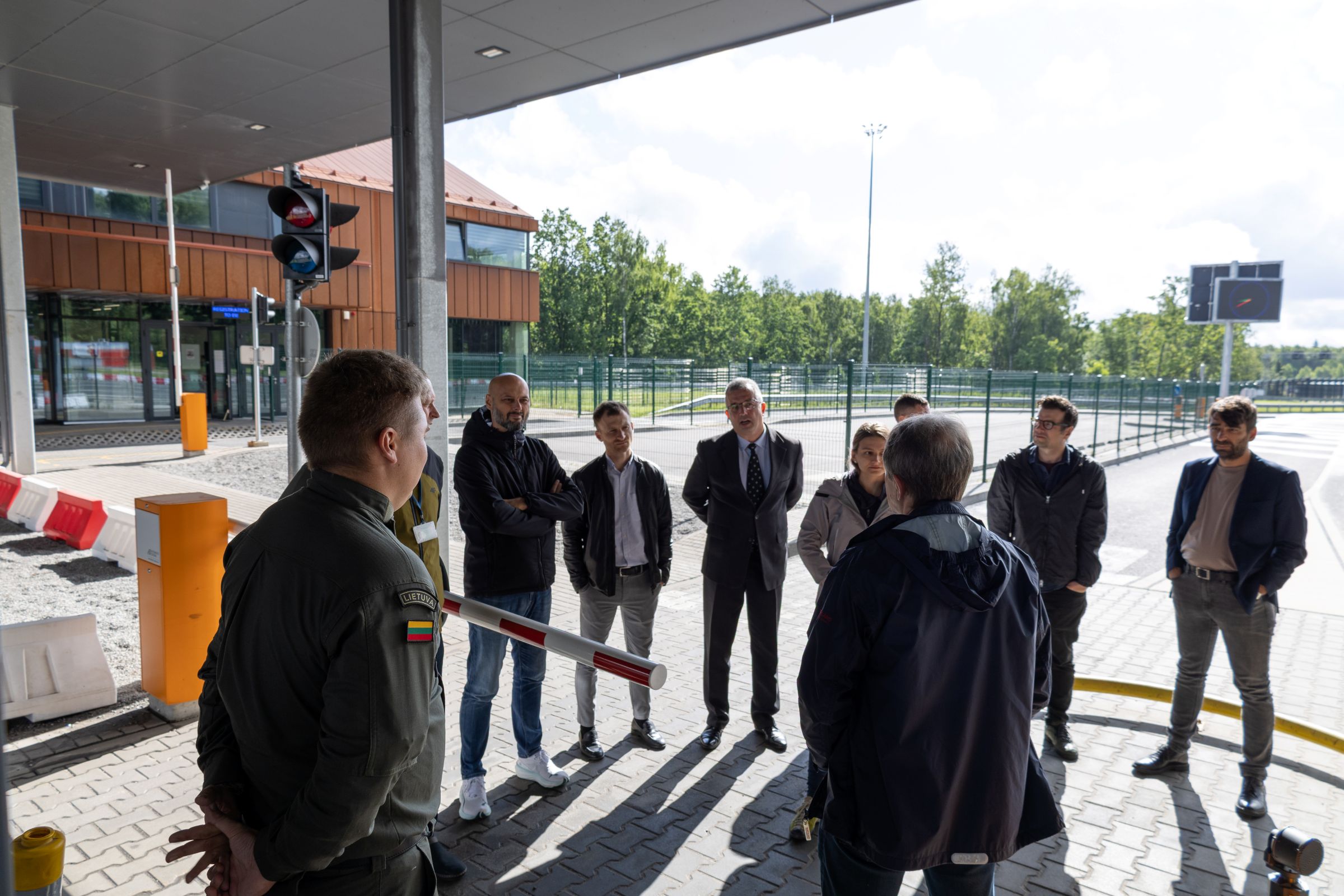
For the first testing session (Use Case 3) we met at the Medininkai Border Crossing Point to validate our tools in real-world conditions. The aim in this Use Case is to establish the probability of corruption (e. g., bribery linked to cigarette smuggling) during the “car-crosses-border” process by comparing features across datasets and by identifying cars with our visual recognition tool, which is looking for unique features. This can lead to more efficient and effective border controls.
For further information on how our FALCON tools work in practice at border crossings, please watch our YouTube video, which was recorded on that day.
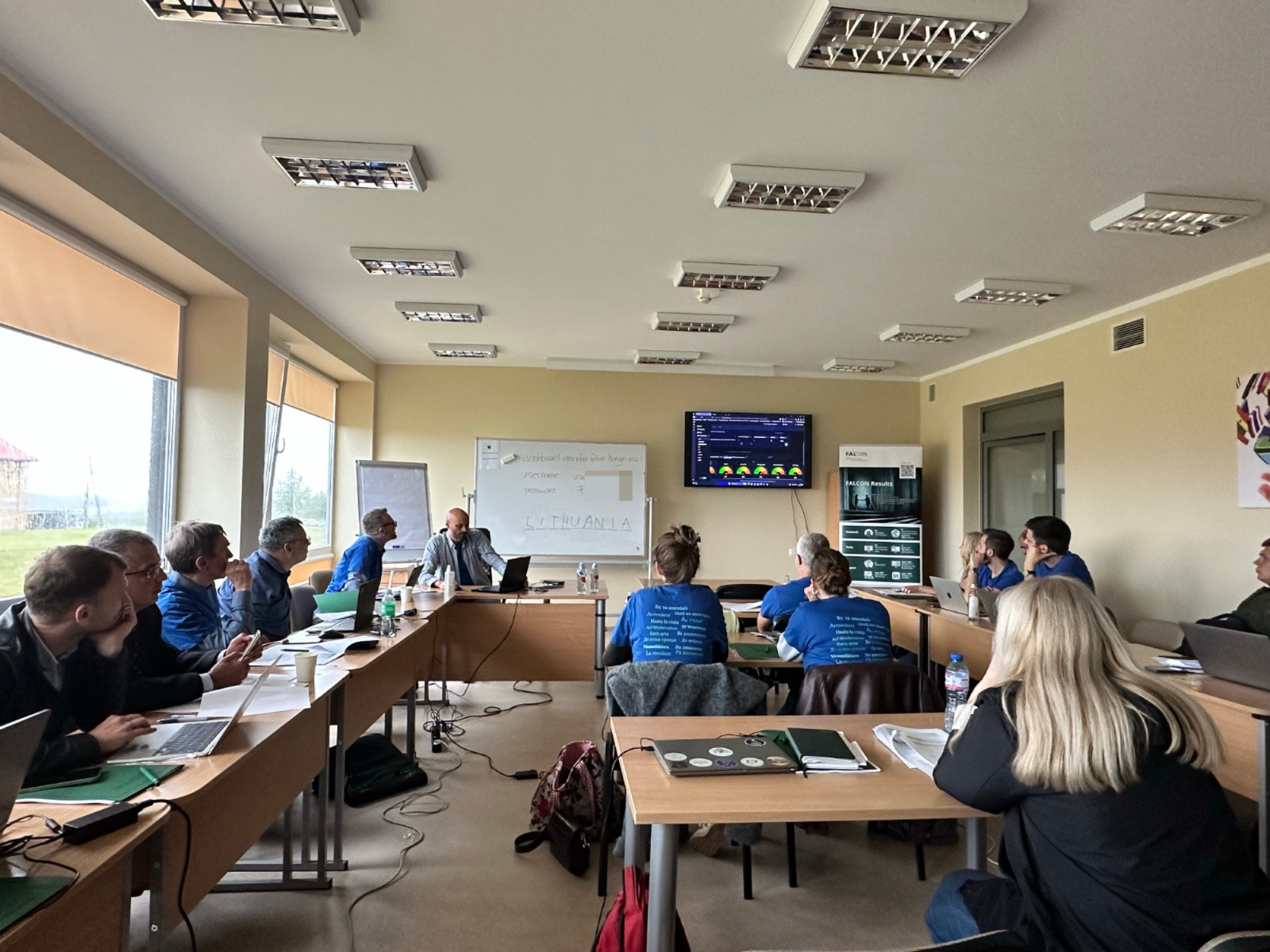
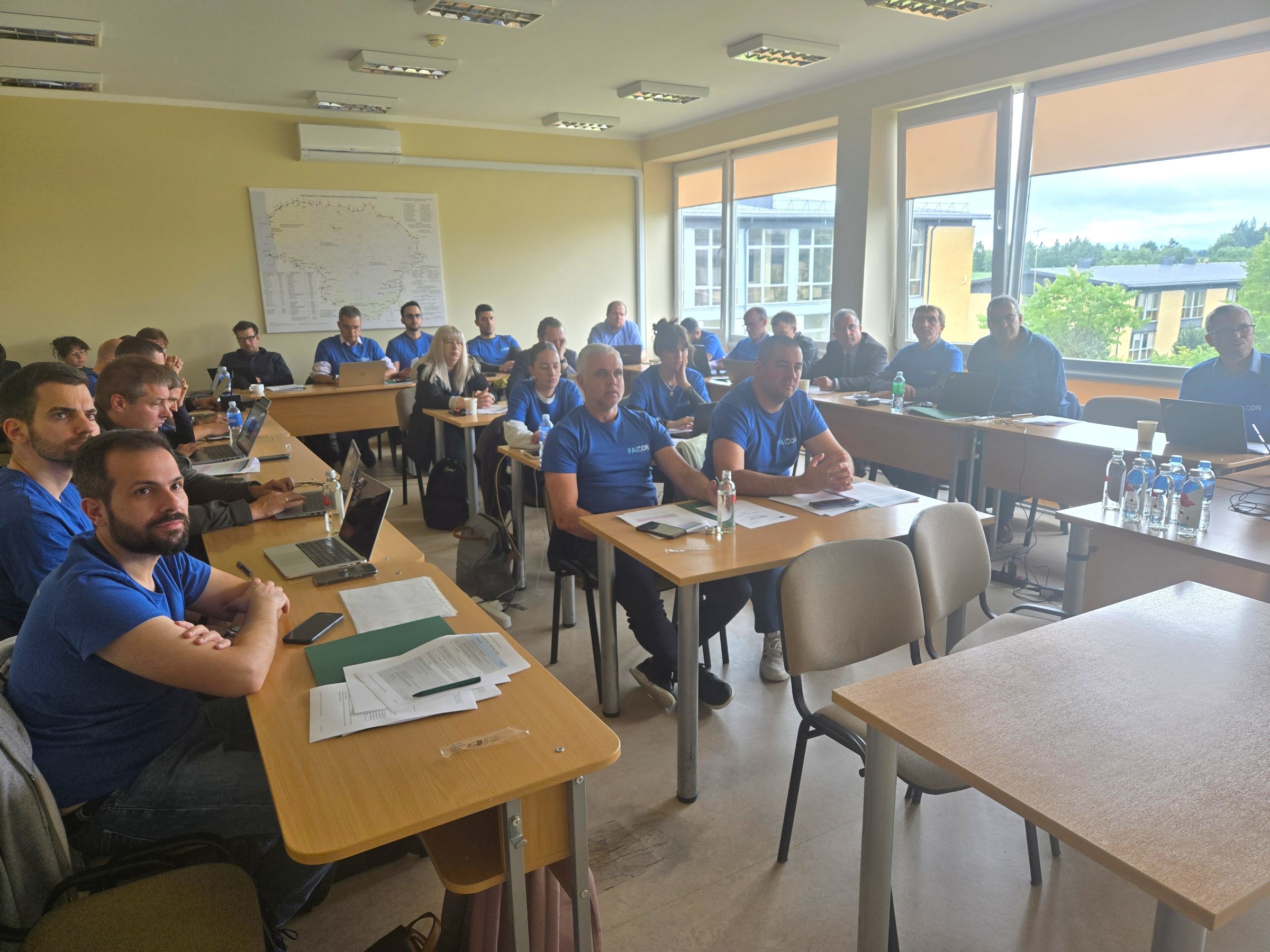
The remaining Use Cases were tested in the Border Guard School’s classrooms, as these were investigation scenarios in which we used the other tools within our FALCON dashboard. The scenarios were hypothetical but used real-world tender data and entity names as context.
Use Cases 1 and 4 were examined together in two different scenarios:
- Scenario 1: Call for tender phase with analysis of risk for single bidding.
Tools used in this Scenario: FALCON Dashboard / Knowledge Base, Predictive Analytics Tool, ACRA Tool
- Scenario 2: Ex-post evaluation of tenders with particular attention to potential conflicts of interest.
Tools used in this scenario: FALCON Dashboard, OSINT Tool, ACRA Tool
The Use Case 2 scenario was about sanction circumvention of a (hypothetic) Russian oligarch.
Tools used in this scenario: FALCON Dashboard, ACRA Tool, Kriptosare, Trends Detection Tool
Final Event: From Shared Results to Lasting Impact
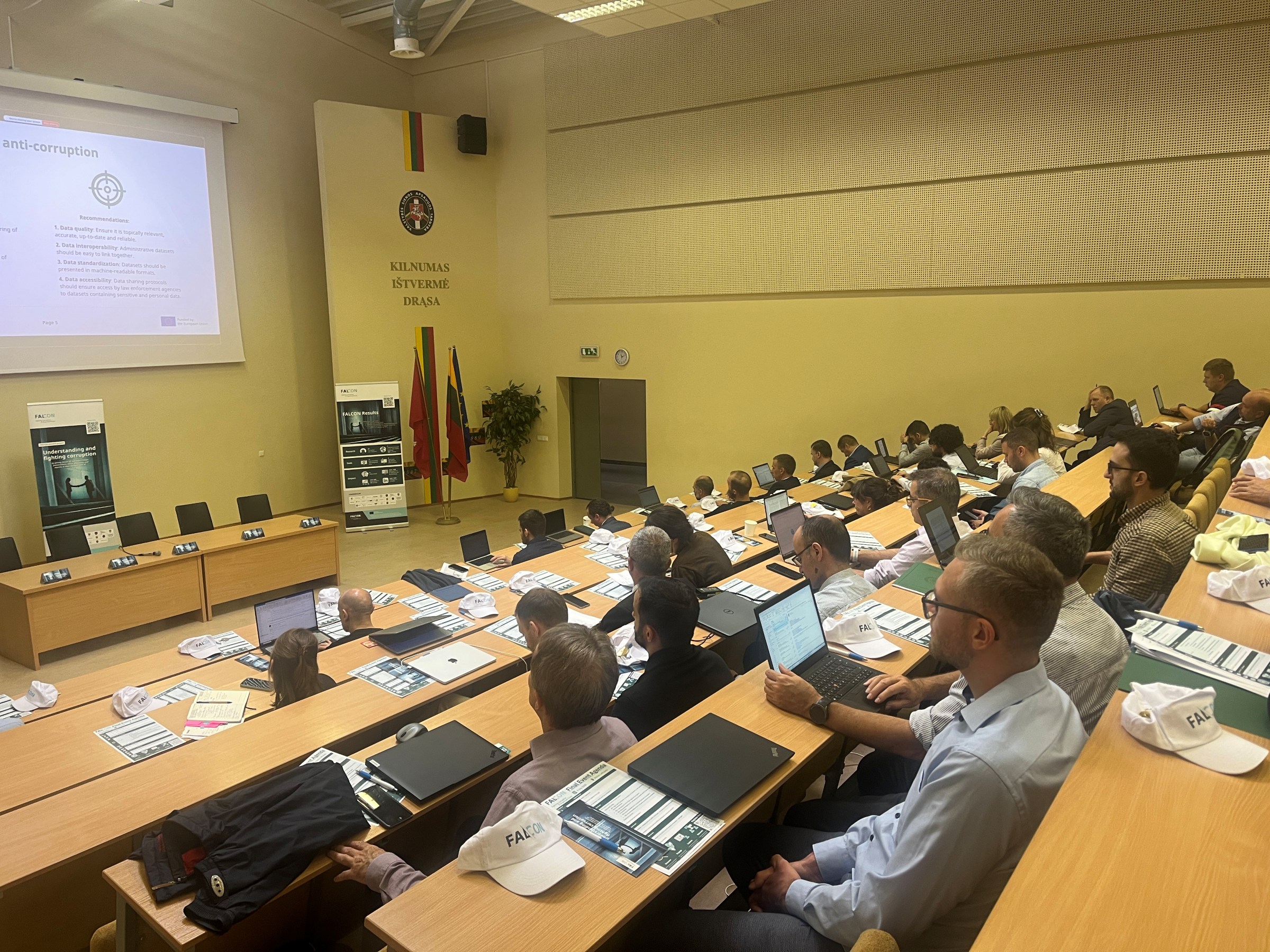
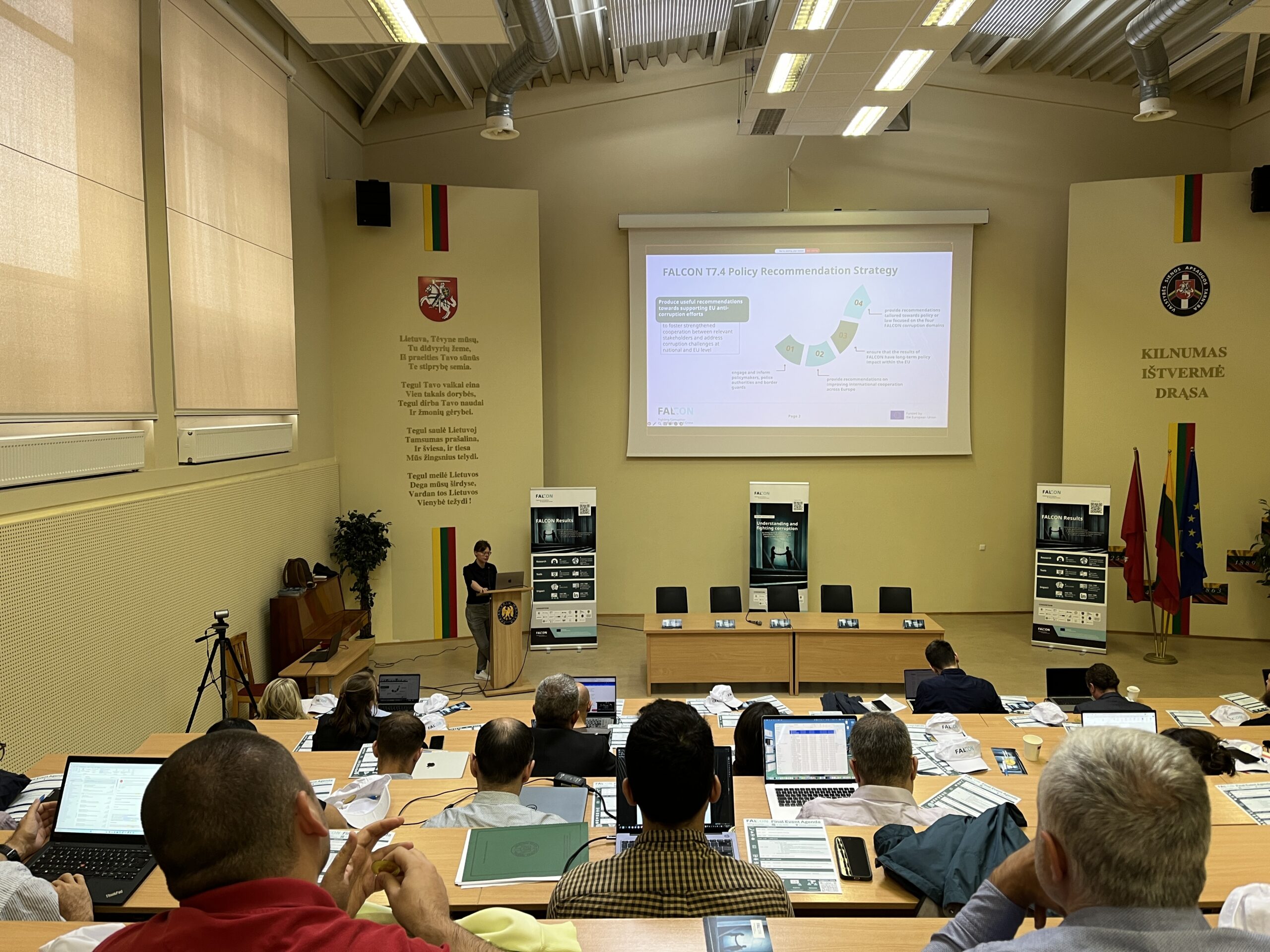
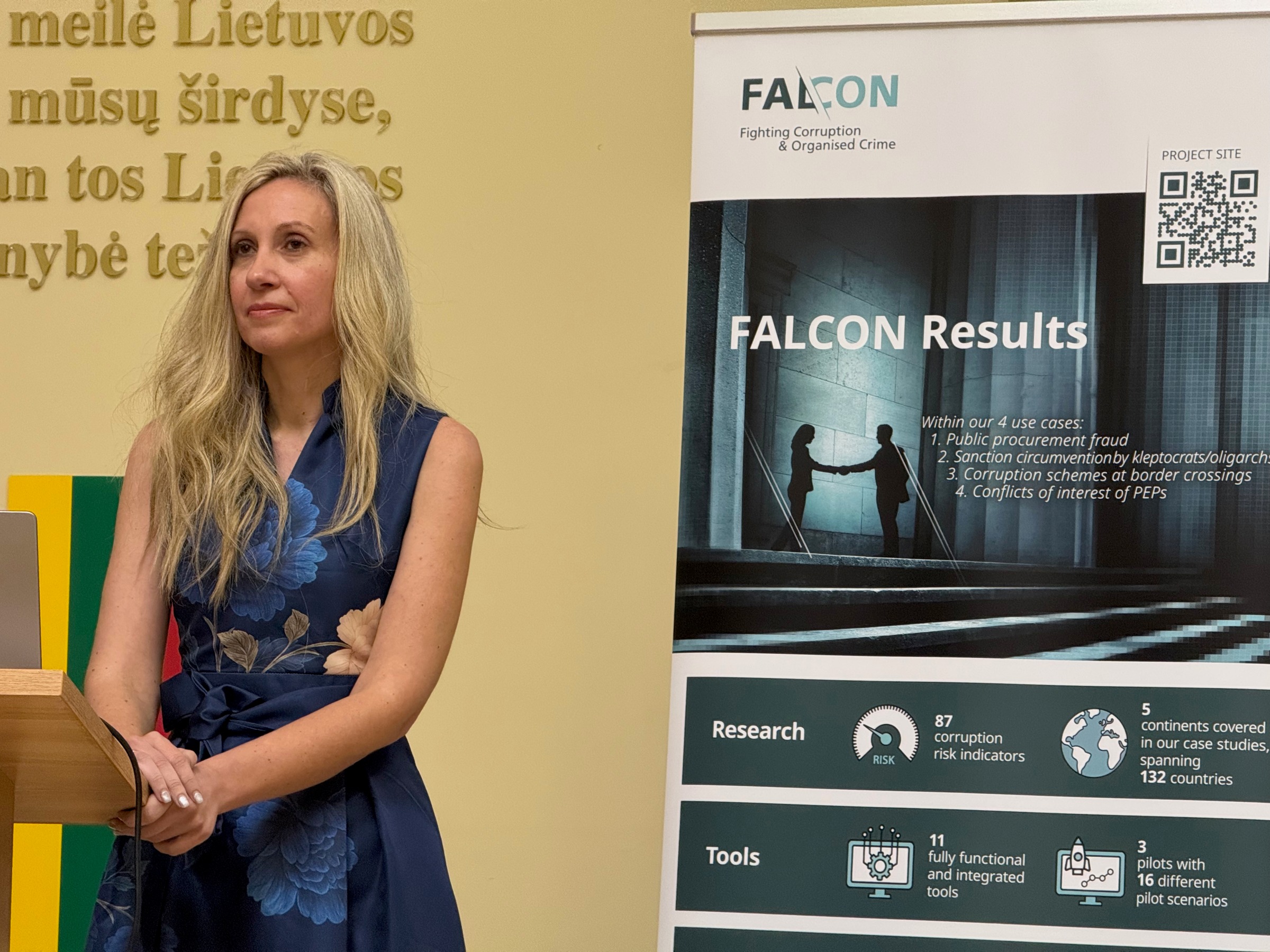
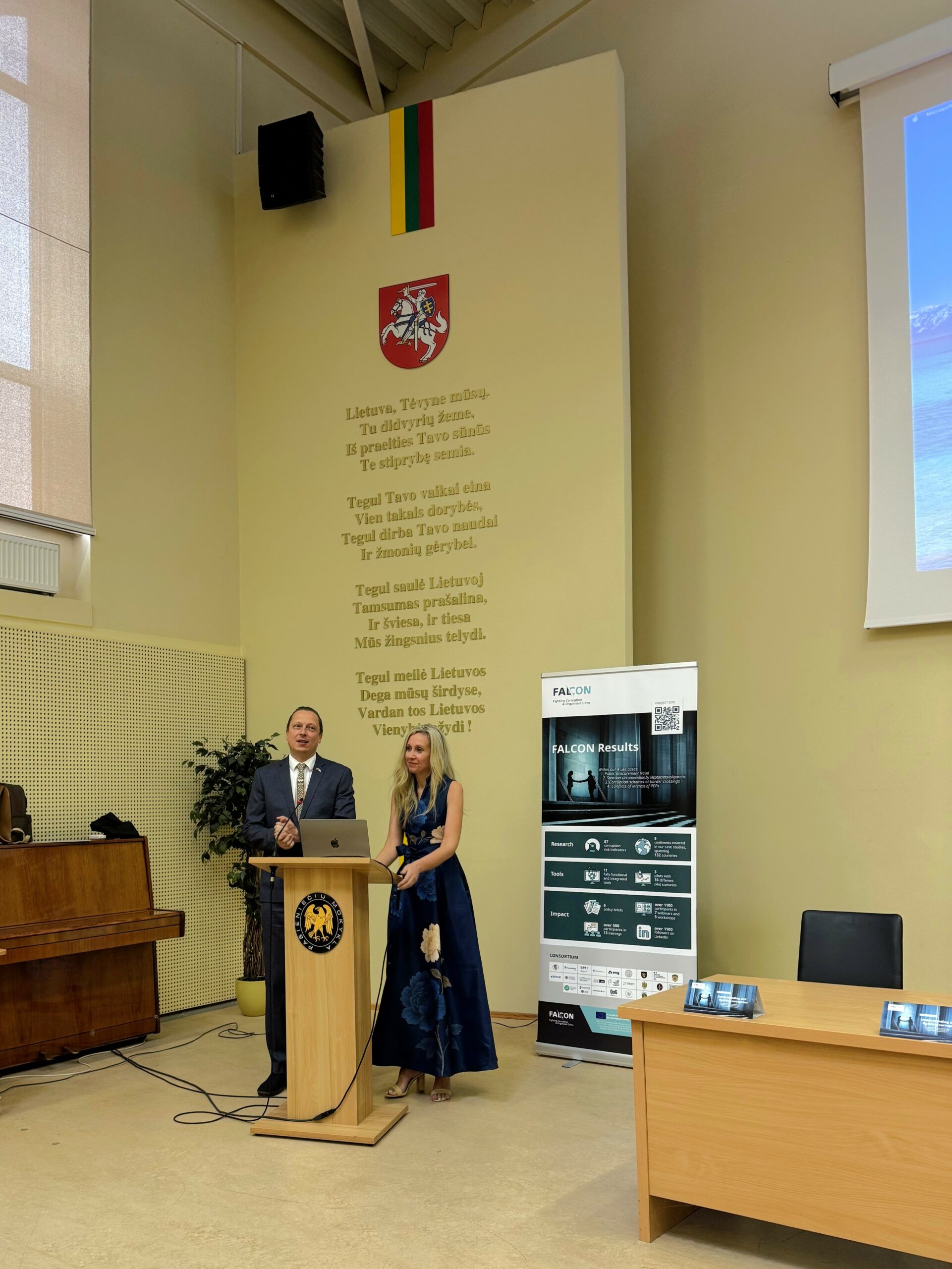
After the practical tool validation of the previous day, the Final Event brought partners and stakeholders together to reflect on FALCON’s results, policy impact and future relevance. Jenny Adamopoulou, FALCON project coordinator from ICCS, opened the event with an overview of the project’s achievements, followed by Helen Gibson from CENTRIC, who presented FALCON’s six Policy Briefs and the consolidated recommendations drawn from them:
▶️ Build integrated and interoperable data ecosystems
▶️ Strengthen harmonisation across EU Member States
▶️ Promote the adoption of advanced technologies and AI for investigations
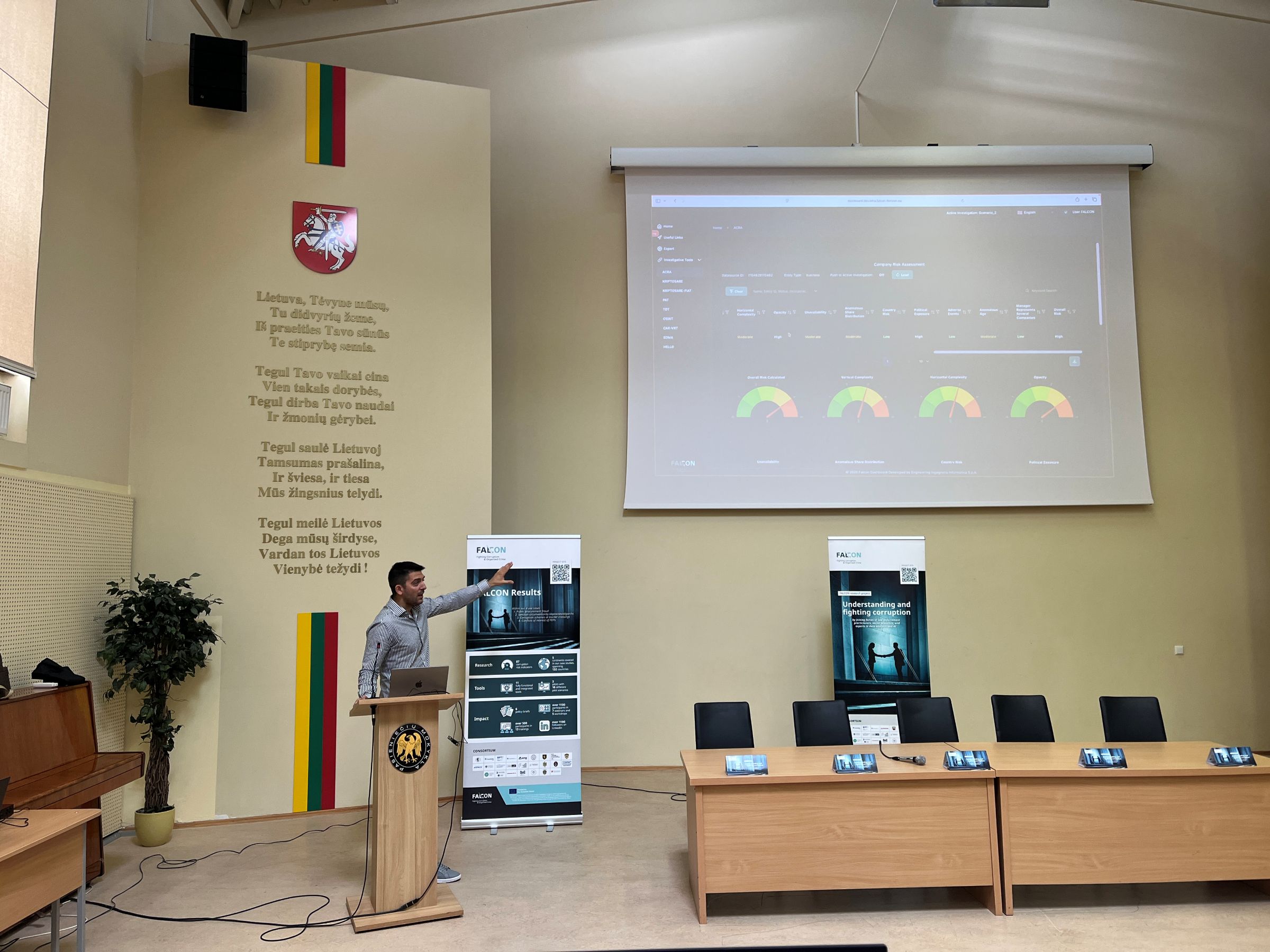
Our technical partners then presented our FALCON Tools within the FALCON Dashboard. A description of all tools can be found on our website under “resources”: FALCON Tools.
Our roundtable discussions in the afternoon broadened our perspective on future and current challenges, and potential synergies in the fight against corruption:
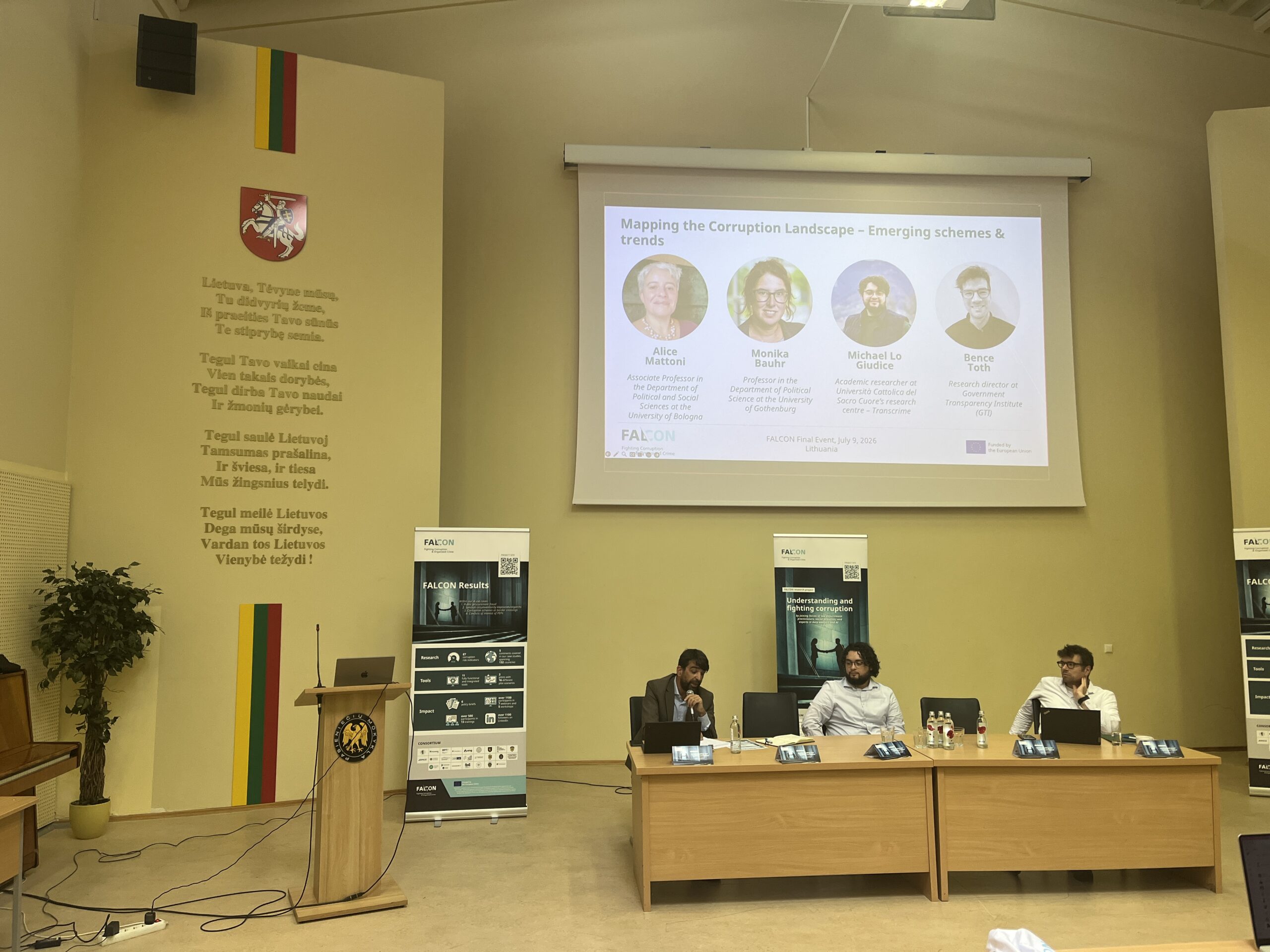
💬 Roundtable 1: Mapping the Corruption Landscape: Emerging Schemes and Trends
Alice Mattoni (University of Bologna, leader of RESPOND_EU), Monika Bauhr (University of Gothenburg), Michael Victor Lo Giudice (Transcrime), and Bence Toth (Government Transparency Institute)
… discussed about challenges & risks and how we can limit them in the future: restore trust, a more democratised anti-corruption sector, and meaningful transparency were key points mentioned here.
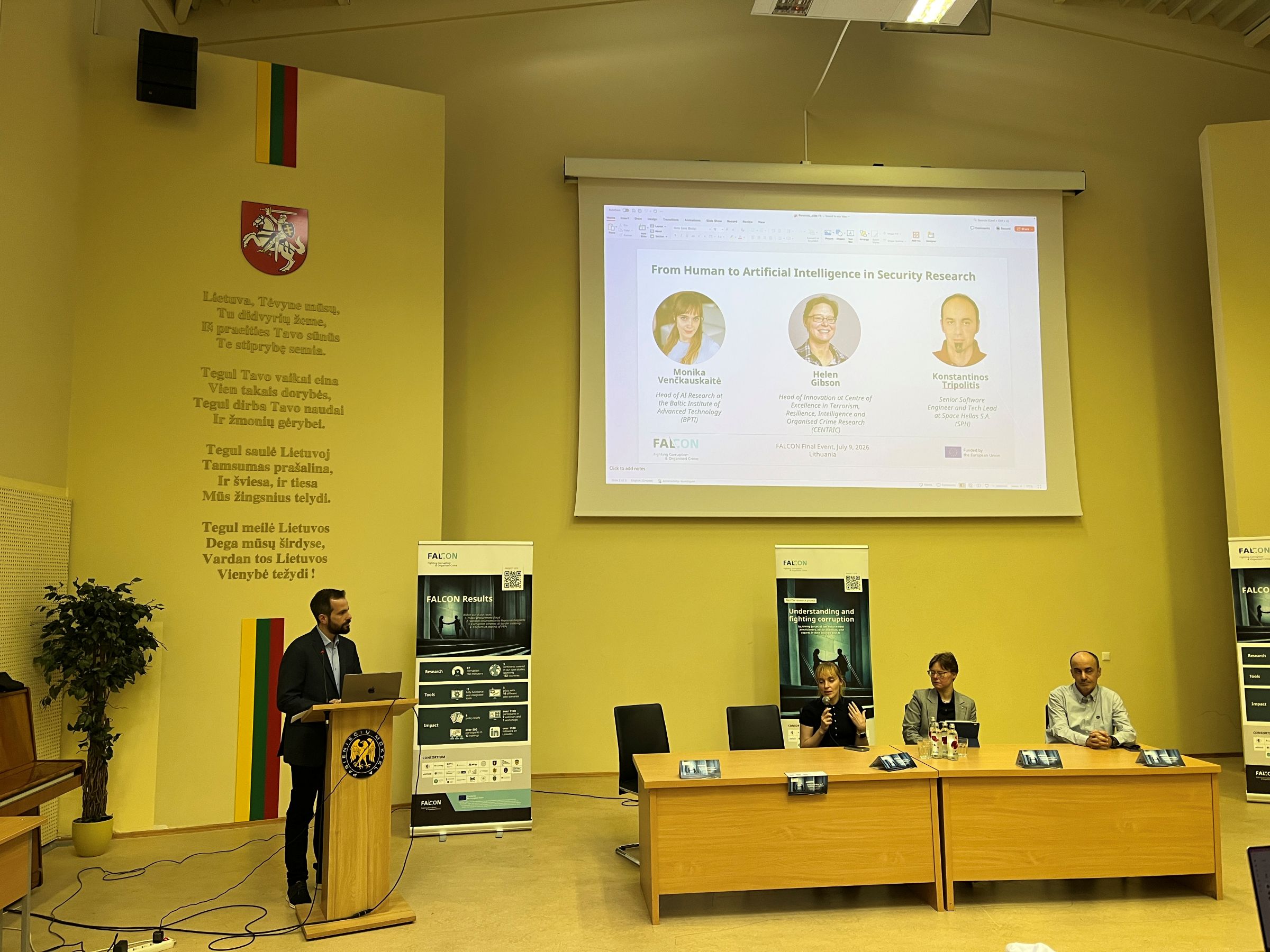
💬 Roundtable 2: From Human to Artificial Intelligence in Security Research
Monika Venčkauskaitė (BPTI), Helen Gibson (CENTRIC), and Kostas Tripolitis (SPACE HELLAS S.A.)
… discussed about changes in the last years, their biggest hopes and concerns: generative AI changed the picture, broader use of AI instead of very specific do
damains, one challenge: keeping it trustworthy
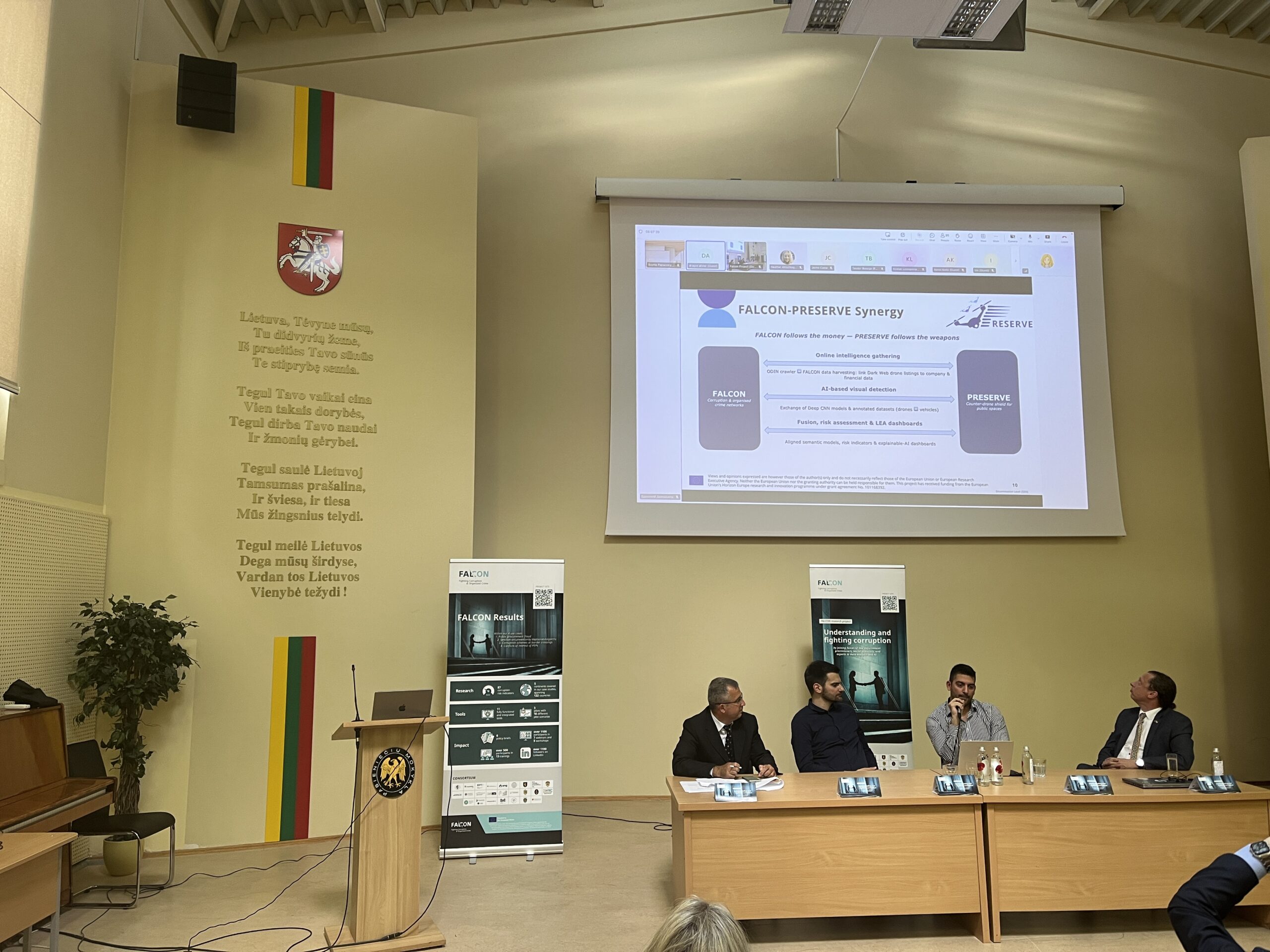
💬 Roundtable 3: FALCON in the EU Research Ecosystem — synergies
Emmanouil Daskalakis (ICCS, project Athena), Dragos Alistar (Romanian Border Police, project VANGUARD), Nikolaos Peppes (ICCS, project PRESERVE), and Laurynas Okockis (Lithuanian State Border Guard Service (VSAT), BorderForce)
… discussed about synergies with FALCON: sharing of methodologies, knowledge, best practices, risk indicators, models, and datasets.
FALCON project coordinator Jenny Adamopoulou summarises the event and underlines the broader value of the project:
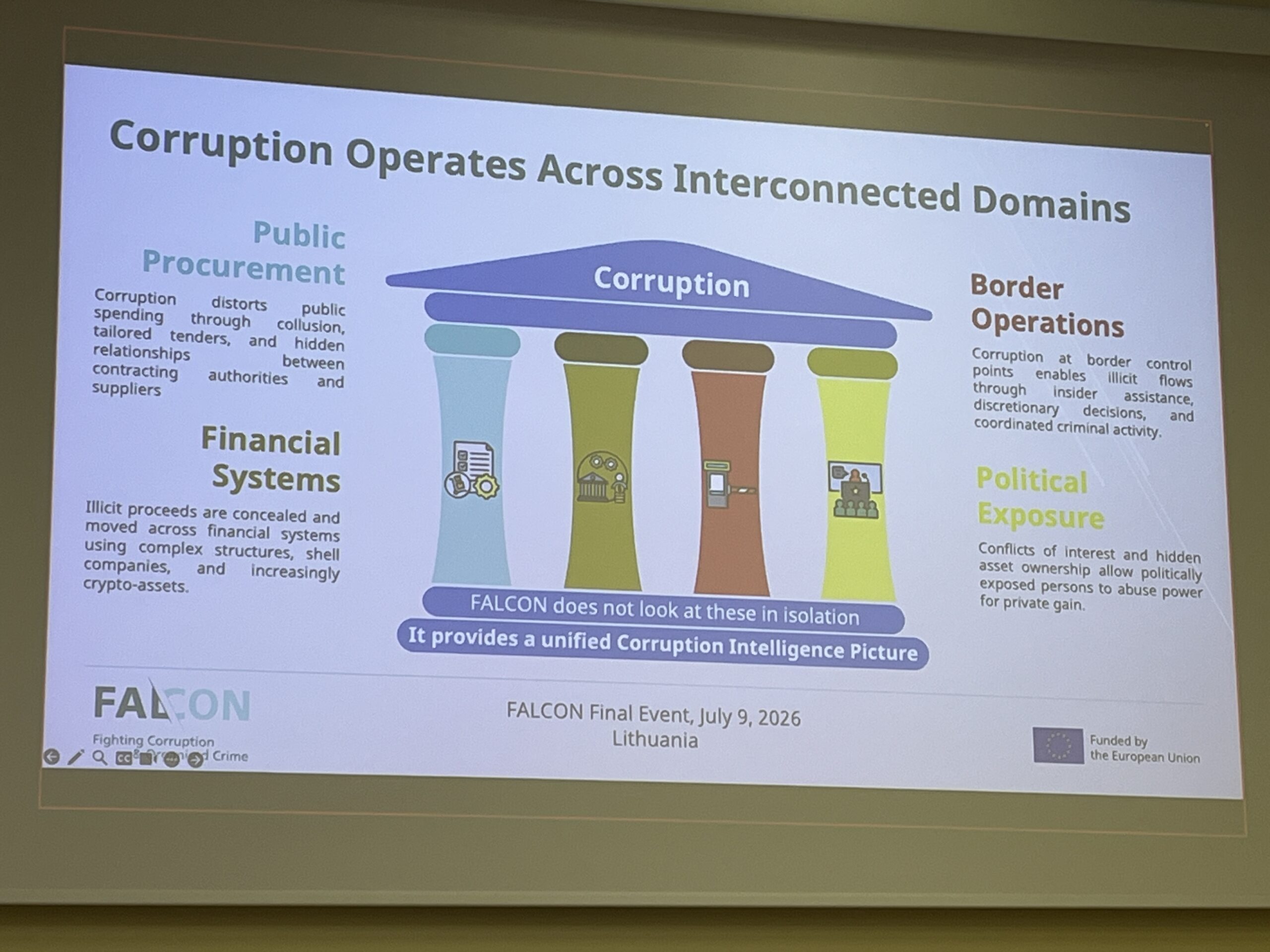
“Looking back, I believe FALCON's legacy goes far beyond a research project. It is a shared Corruption Intelligence Picture, innovative operational tools, policy recommendations, a trained community of users, and—perhaps most importantly—a strong network of people committed to making anti-corruption efforts more effective across Europe. I am especially proud that FALCON has contributed not only to technological innovation but also to European policy discussions, helping shape dialogue on strengthening the EU's civil security. This may have been the final event, but it is certainly not the end of the journey. The knowledge, partnerships, tools and recommendations developed through FALCON will continue to support future research, operational activities and policy initiatives.”
Jenny Adamopoulou